
NST-TB-8000 Public Order AI Camera
Outdoor 8MP bullet AI camera built on NVIDIA Jetson Orin NX with a Sony IMX678 STARVIS 2 sensor — detects, recognises and generates alerts on the device, without the need to send video to a server for analysis.
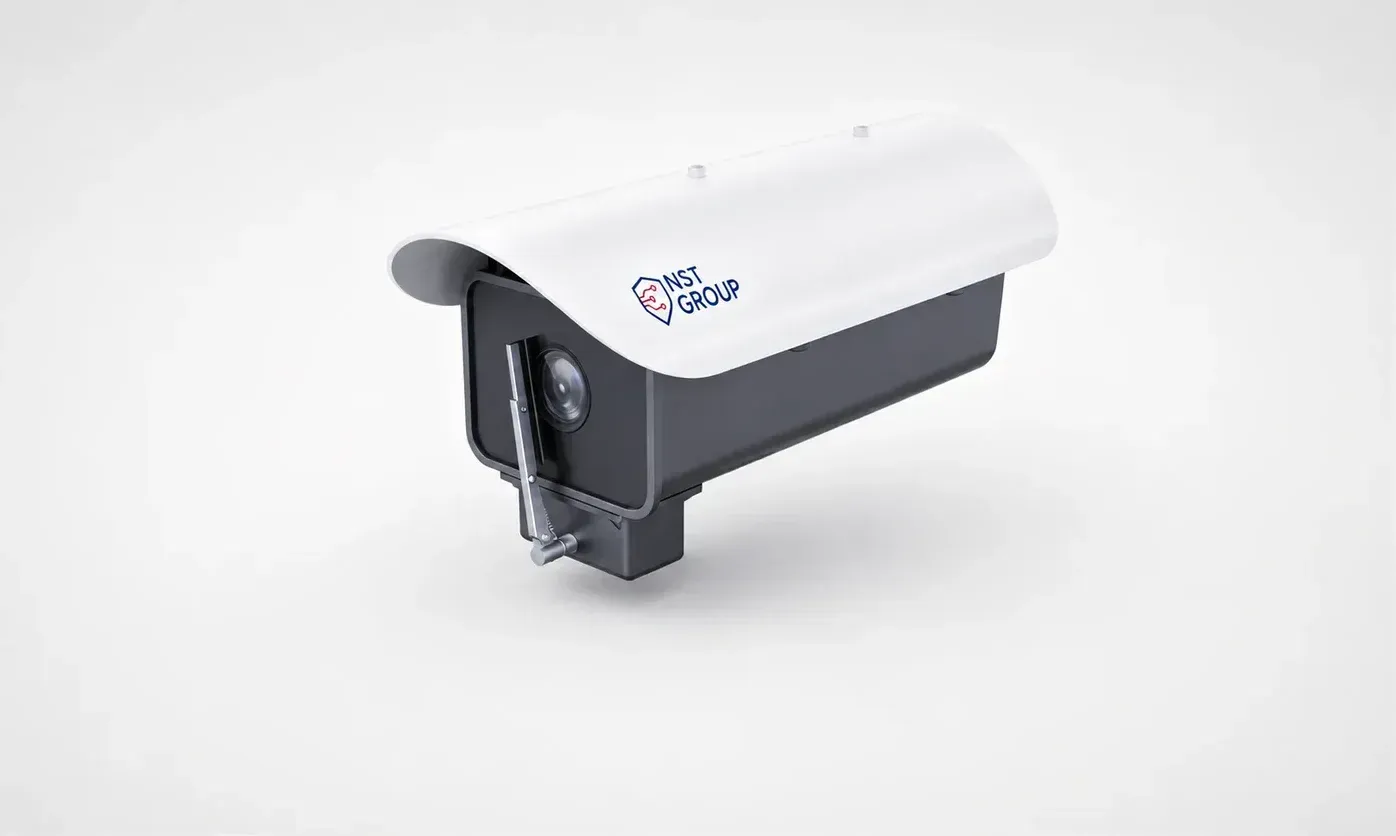 NST-TB-8000
 - 8MP
- 3840×2160 · STARVIS 2
- 5x
- Optical zoom · 10–50mm
- Orin NX
- Edge AI · 8GB
- IP67
- IK10 impact rated
Highlights
What sets it apart.
Edge AI processing on NVIDIA Jetson Orin NX 8GB — 1024 CUDA cores, 32 Tensor cores
Sony IMX678 STARVIS 2 sensor, 8MP (3840 × 2160), with good visibility in low-light conditions
Motorised 10–50mm lens, 5x optical zoom, F1.4 aperture — field of view adjustable remotely without climbing the pole
128GB NVMe SSD for local buffering: recording continues and events are retained when the network connection is lost
Each camera has its own digital certificate signed by NST’s Device CA; the private key does not leave the device
IP67 outdoor housing, IK10 impact resistance, cooling by a large heatsink combined with an active fan
Overview
NST-TB-8000 Public Order AI Camera
Why process AI on the device
The traditional model sends all video to a central site before analysing it — consuming bandwidth, depending on the transmission link and adding latency. NST-TB-8000 reverses this approach: the camera itself detects, classifies and extracts features, and sends back only events, snapshots and metadata.
Three practical outcomes:
- Sharply reduced bandwidth — only what is of interest is transmitted, instead of a continuous video stream
- Keeps working when the network is down — events are stored on the local NVMe SSD and synchronised automatically once the connection is restored
- Immediate alerts — no waiting for a round trip to the central site and back
Edge AI capabilities
Person recognition
Detects people and faces, performs face recognition and classifies people by appearance attributes (hair colour, gender, age group, clothing colour). Extracts facial features, full-body features and re-identification features (Person Re-ID) to trace a person across multiple cameras. Raises an alert when a person on a watchlist is detected.
Vehicle recognition
Detects and classifies vehicles, and recognises licence plates, vehicle type, body style and colour. Extracts vehicle re-identification features (Vehicle Re-ID) and detects direction of travel. Raises alerts for vehicles on a watchlist.
Area protection and urban order
Detects restricted-zone intrusion, virtual fence crossing, abnormal loitering, prolonged stopping or parking, encroaching vehicles, encroaching items and advertising signs, informal street markets and illegal dumping. Multiple alert conditions can be combined on the same camera.
Behaviour and security events
Detects crowd gathering, crowds fleeing, people falling, fighting, pushing and shoving, weapons (knives, clubs, guns) and weapon-wielding behaviour.
Fire and objects
Detects smoke, flames, fires, unusual objects, and objects that are abandoned, moved or present for an extended period.
Deployment models
TB-8000 operates in an on-premise model to provide monitoring, analysis and alerting functions according to the operator’s configuration. The device collects the necessary images, video, events and operational logs; data is processed on the device and/or in an internal VMS managed by the operator, and is stored on the device or on internal storage infrastructure chosen by the operator. TB-8000 does not transmit user data, images, video or analytics data to NST’s cloud infrastructure and does not provide P2P services. Data retention, access and deletion are configured and managed by the operator in accordance with applicable regulations.
- Camera + on-site centre (on-premise) — video, events and metadata are sent to servers located at the operator’s premises. Suited to government agencies and critical sites that require data to remain in-house.
- Camera + existing VMS — provides video streams, snapshots, metadata and APIs to the video management system or command centre already in use.
Device security
Each camera is a distinct entity with its own identity: its private key is generated on the device during manufacturing and does not leave the camera, is not written to any log and cannot be read out through any API. The certificate is signed by NST’s Device CA, and servers authenticate the camera through the certificate chain.
In addition: there is no shared default password, network interfaces are protected against password guessing, firmware updates must pass digital signature verification, debug ports are disabled in commercial builds, and user data is completely erased upon factory reset or decommissioning of the device.
Regulatory references
The product configuration has been compared against QCVN 05:2024/BCA — 8MP against a minimum of 4MP, a 128GB NVMe SSD against a minimum of 32GB of edge storage, support for H.264/H.265, ONVIF Profile G/S/T, and automatic transmission of data to the central site when the connection is restored.
For cybersecurity, the design follows QCVN 11:2026/BCA: a unique password for each device, secure firmware updates, protection of sensitive parameters, protection of personal data in transit, automatic recovery after power or network loss, and the ability to configure data storage in Vietnam.
Firmware and security support
The current firmware version for NST-TB-8000 is nvxb-1.0.0.30.20260824.bin (released 24 August 2026). See the firmware lookup table for the latest version and the security support period, or the update guide, which describes the procedure for loading firmware through the official management platform.
NST declares a period of at least 5 years of technical support, warranty and software updates, including cybersecurity patches where necessary, for the NST-TB-8000 camera, counted from the date on which NST announces the end of commercial production of this product line. The end-of-production notice, if any, will be published on this page.
If you discover a security vulnerability in the device, please report it to NST’s vulnerability reporting centre.
Operating documentation
- TB-8000 secure operation guide — administrator account management, day-to-day operation, configuration changes and incident response
- Administrator password recovery — recovery procedure using a challenge code and a digitally signed unlock code
- Web interface user manual — 14-page PDF document in Vietnamese, available for download below
Site survey needed before finalising the configuration
Recognition performance depends on site conditions, so the following need to be confirmed in advance:
- Installation distance, height and angle
- Density of people and vehicles, speed of movement, degree of occlusion
- Size of faces, bodies, vehicles and licence plates in the frame
- Lighting conditions: daytime, night-time, backlight, rain and fog
- Number of AI models running concurrently, and acceptance criteria
- Edge storage requirements, bandwidth to the central site and VMS integration approach
Limits of applicability. NST does not guarantee absolute 100% accuracy for face recognition, licence plate recognition, person and vehicle attributes or behaviour detection under all site conditions. Results depend on image quality, lighting, viewing angle, distance and degree of occlusion.
Note on rolling shutter. The sensor uses a rolling shutter, so the mounting angle, shutter speed, focal length and lighting need to be configured in a suitable combination to limit blur when objects move quickly. Do not use flash/strobe lighting as the default configuration.
Specifications
Technical specifications.
- Processing platform
- NVIDIA Jetson Orin NX 8GB — 8-core Arm Cortex-A78AE CPU, Ampere GPU with 1024 CUDA / 32 Tensor cores
- Memory
- 8GB LPDDR5 128-bit
- On-device storage
- 128GB NVMe SSD (optional upgrade to 256GB / 512GB)
- Sensor
- Sony IMX678 STARVIS 2, 1/1.8-inch format, 2.0 µm pixel size
- Shutter type
- Rolling shutter
- Resolution
- 3840 × 2160 (8MP)
- Lens
- Motorised zoom 10–50mm, C-mount, P-iris F1.4 aperture
- Optical zoom
- 5x (10–50mm); optional 4x (10–40mm)
- Horizontal field of view
- 41.8° at 10mm — 10° at 50mm
- Minimum focus distance
- 0.5 m
- Main stream
- 4K H.265, 60 FPS target depending on pipeline and thermal conditions
- Sub stream
- 720p
- Compression
- H.265 / H.264 / AV1
- Illumination
- Not built into the body; paired with external 850nm infrared or white-light illuminators
- Network
- 1GbE Ethernet
- Power
- PoE+ / PoE++ depending on power configuration
- Power modes
- 10W / 15W / 25W
- Integration protocols
- RTSP, ONVIF, integration API
- Enclosure protection
- IP67, IK10 impact resistance
- Cooling
- Large heatsink combined with an active fan
- Mounting
- Pole, wall, bracket arm, roof or outdoor structure
- Lens operating temperature
- −20°C to +60°C
- Device identity
- Unique digital certificate signed by NST’s Device CA; the private key does not leave the camera
- Firmware updates
- Digitally signed and integrity-checked before installation
Downloads
Operating documents.
Official documents for the device. After downloading, compare the SHA-256 hash below to make sure the file was not altered in transit.
NST-TB-8000 camera user manual
Requirements:Operation via the device’s web interface
14 pages of guidance, from login and camera configuration to event management (in Vietnamese).
SHA-25655bc052339567f3d1017add648ff5bf4da604398dba9dfc4a84b589979c953b4
Only download software and documents from NST’s official domain nstgroup.vn. Check the hash with certutil -hashfile <file> SHA256 (Windows) or shasum -a 256 <file> (macOS) — the result must match the value above.
Use cases
Where it is deployed.
- Surveillance of streets, squares, pedestrian zones and public spaces
- Protection of critical sites: agency headquarters, factories, storage facilities, ports, data centres
- Urban order monitoring — pavement encroachment, informal street markets, illegal dumping
- Tracing people and vehicles across multiple camera locations to support investigations
Same product group
Security control equipment

Access Air NST GATE AI Access Control Device
AI face recognition device with edge processing, enabling fully automatic and contactless access control — recognition in under 1 second, with up to 50,000 faces stored on the device.
View details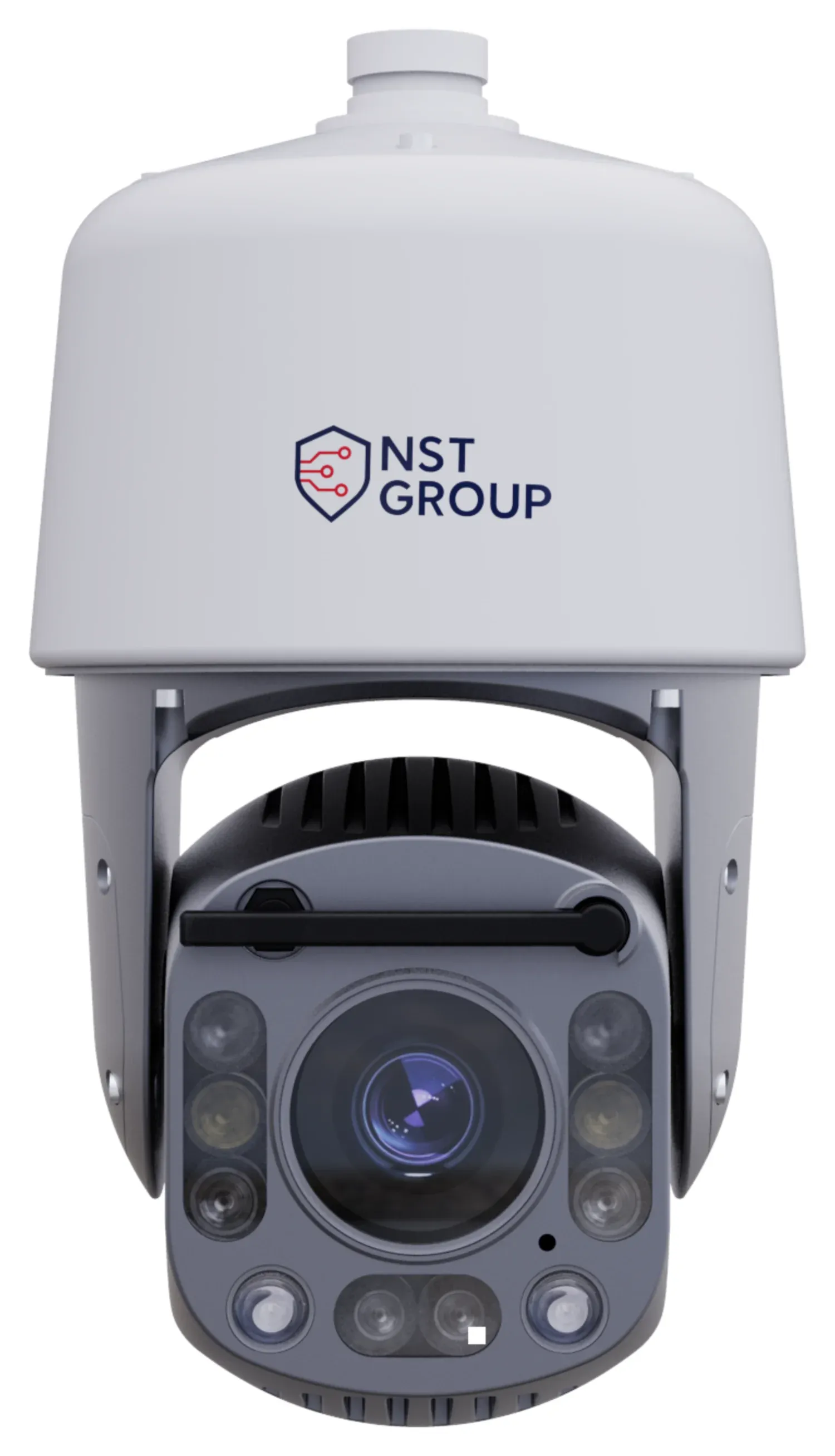
NST-TP-8000 AI PTZ Camera
Outdoor 8MP AI PTZ camera with ≈42.8x optical zoom and a 200m-range infrared illuminator — remote pan-and-tilt control, flexible switching between wide-area views and long-range close-ups, and AI processing on the device.
View details
NST-Z5-8M 8MP Fixed IP Camera
Outdoor 8MP fixed IP camera with a motorised 2.7–13.5mm lens and two LEDs with a 50m range — provides accurate images for surveillance and AI analytics systems, with PoE power and an IP66 metal housing.
View detailsContact
Need a solution for your organisation?
NST’s engineering team is ready to discuss your operational requirements, integration approach and deployment conditions.